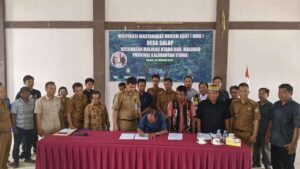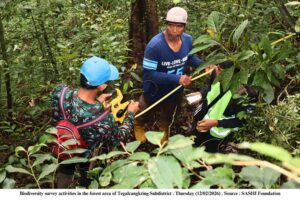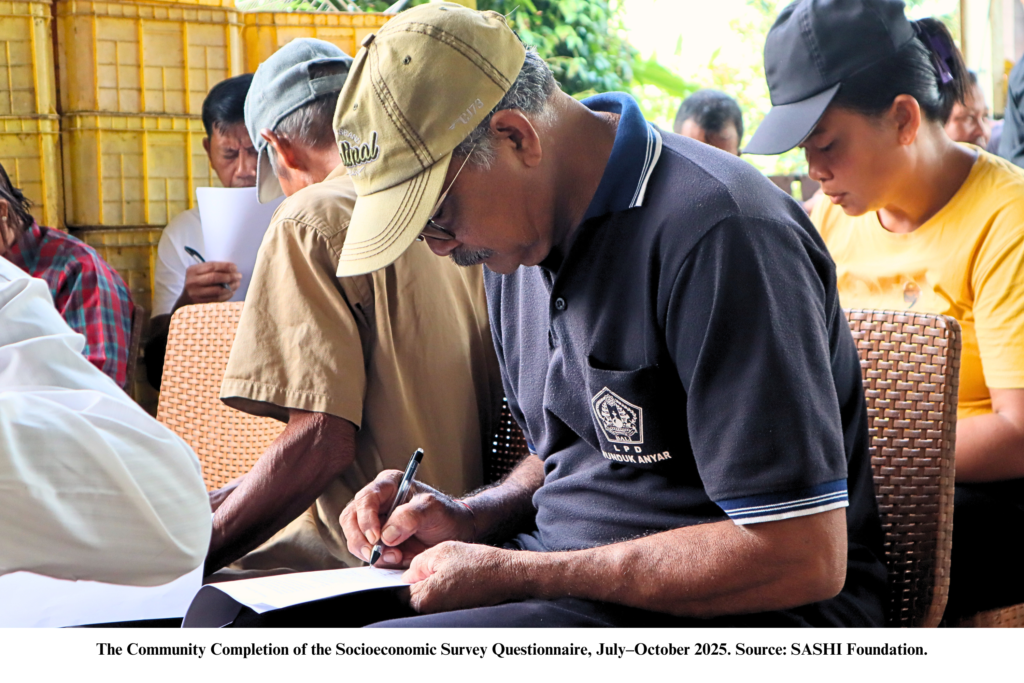
Following the stakeholder consultation workshop on community consent for the socioeconomic and biodiversity surveys held on 13 July 2025 at Jimbarwana Hotel, the SASHI Foundation, with support from Rainforest Trust, successfully conducted a comprehensive socioeconomic survey in 12 forest-adjacent villages in Jembrana Regency between 29 July and 22 October 2025. The surveyed villages included Yehembang Kauh, Pulukan, Yehembang Kangin, Medewi, Yeh Sumbul, Yehembang, Tegalcangkring Subdistrict, Batuagung, Penyaringan, Pohsanten, Mendoyo Dauh Tukad, and Pergung.
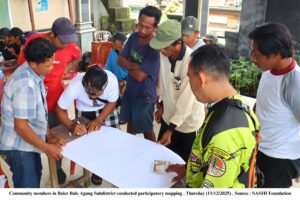
The survey was designed to generate reliable baseline data to inform project planning, implementation, and monitoring. A mixed-methods approach was applied, combining household questionnaires, key informant interviews, Focus Group Discussions (FGDs), and participatory mapping using Participatory Rural Appraisal (PRA) tools. Household respondents were selected from forest-adjacent communities, with sample sizes determined using the Slovin method to ensure statistically representative coverage based on village population size. Participatory mapping involved key local stakeholders, including village and hamlet leaders, traditional village authorities, social forestry group members, and subak leaders.
Through participatory mapping and FGDs, the survey captured spatial and qualitative information critical for conservation and livelihood planning, including land use patterns, customary and institutional arrangements, the distribution of rare and protected species, and areas of cultural, economic, and livelihood importance for forest-adjacent communities. These activities also strengthened community engagement and ownership of the data collection process.
Key outputs of the survey include : (1) completed and verified questionnaires from households, village authorities, and traditional leaders; (2) consolidated data on socioeconomic conditions, land use, natural resources, institutional structures, and subak systems; (3) community-validated lists of protected flora and fauna; (4) geospatial (SHP) datasets identifying important points, linear features, and land cover in each village; and (5) village-level layouts summarizing the socioeconomic and PRA findings.
Overall, the results provide a robust evidence base for understanding community conditions, identifying priority intervention areas, and designing targeted conservation and livelihood activities. Building on this progress, the next phase will extend socioeconomic surveys to an additional 15 forest-adjacent villages, ensuring full coverage of all 27 target villages and strengthening the foundation for effective, inclusive, and measurable project outcomes.